
April 2026 Deep Dive: Resourcing Movements
Across Europe, organisers and communities are shaping what digital justice looks like in practice: organising for alternatives, dismantling harmful infrastructures enabled and amplified by the tech industrial complex, and nurturing liberatory futures into being. Each month, we gather resources, spotlight work happening across the ecosystem, and share insights from our programming around topics that shape the moment. This series is a space to move beyond critique—to delve into resistance in practice, celebrate visions already taking root, and imagine what we can grow together. This month we're exploring Resourcing Movements.

Dive in, get curious and imagine with us!
Money flows, but in ways that concentrate power and resources away from liberatory visions and outcomes. This month we dug into how resources move– (or don’t) in digital justice organising across Europe.
Resourcing is about enabling peer solidarity.
–Salmana Ahmed, Cassie Denbow, élysse marcellin, Laurence Meyer, and Nino Ugrekhelidze in Alliance Magazine (2025)
Resourcing is about enabling income generation.
Resourcing is about supporting land justice.
This April, we uplifted inspiring and exciting resourcing practices, and ideas around what can be done to redistribute funding to movements with the politics, visions and strategies to resist against structural harms and bring to life liberatory digital futures.
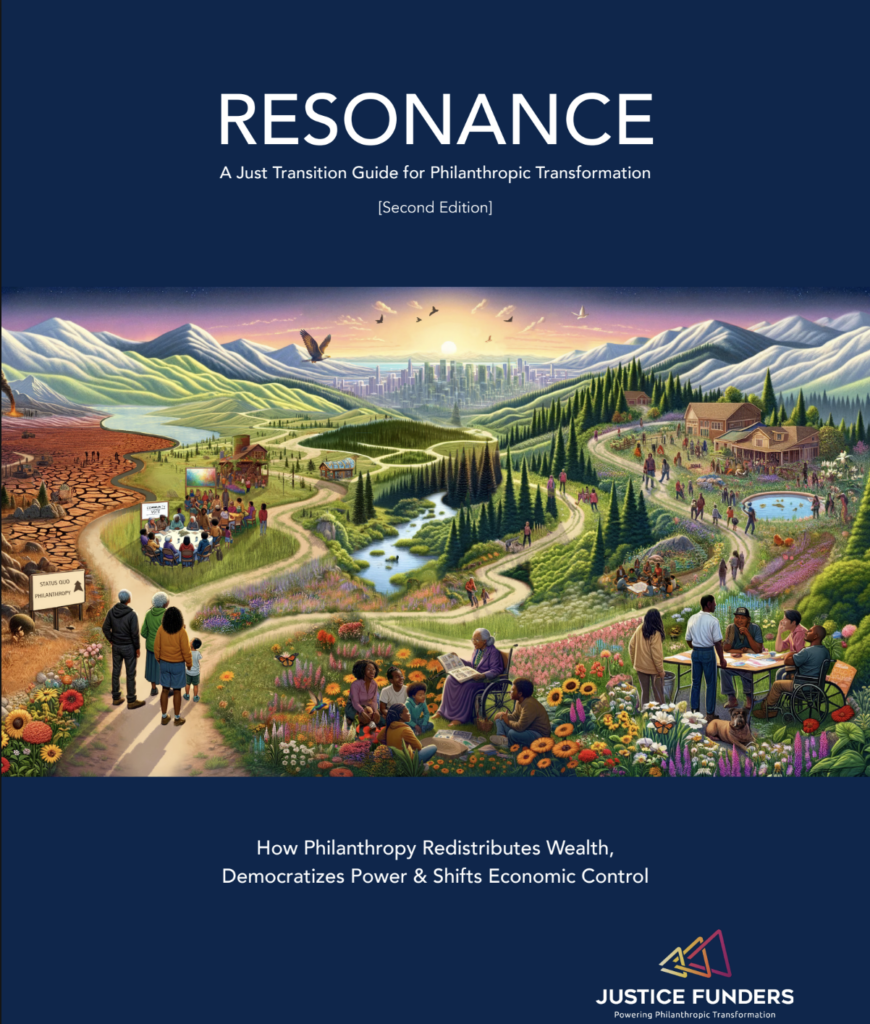
Most philanthropy talks about shifting power. Justice Funders‘ Resonance framework shows us how!
Resonance — now in its second edition — moves funding from compliance-heavy reporting to multi-year, no-strings grants — and from silos to shared ecosystems.
The guide includes stories of funders that trust grantees to know what they need. Here’s an example: Ceres Trust and the Latino Community Foundation no longer request budgets as part of their grant decision-making.
What if more institutions followed their lead?
Check out Justice Funders’ 2024 State of the Movement video for an in-depth conversation on the topic of redistribution and regenerative economies.
The Silicon Valley Community Foundation sits at the heart of tech philanthropy—managing assets tied to some of the industry’s most powerful figures. Between 2014 and 2024, it gave millions to anti-LGBTQI, anti-abortion, and “sexual purity” groups operating in Latin America, Eastern Europe, and Africa.
At the same time, the same foundation funded reproductive rights and human rights organisations. The contradiction reveals how philanthropic ecosystems can sustain politically opposed projects at once.
@noor.network and @theijsc‘s ‘Big Tech Cash for the Backlash’ report traces how tech-linked capital flows to anti-rights networks. Knowing those pipelines is the first step toward building alternatives that resource liberation instead.
Where is the Money?
The first-ever mapping of intersectional organising across Central and Eastern Europe, the Caucasus, and Central and North Asia.
@dalanfund found almost no core support for groups working at the intersections of gender, race, disability, and migration.
Yet those groups continue to organise. The report lists them by name.These are groups holding ecosystems together with minimal support. What could they build with multi-year, flexible funding?
Funding Freedom: Repression, Retrenchment, Resilience
Nearly 90% of foundation wealth sits in investment funds. The Gates Foundation’s $77 billion endowment holds over $14 billion in companies tied to Israel’s occupation and genocide (Microsoft, Amazon, Lockheed Martin).
The Wellcome Foundation—the UK’s largest foundation, with a £37.6 billion endowment—holds more than £1 billion in similar stocks.
This report, by Soheir Assad and Rebecca Vilkomerson lays out the current status of philanthropy following October 7, 2024.
An 2025 article published in The Forge elaborates on philanthropy’s mandate to divest from genocide in Palestine and beyond.
What do we leave behind when the grant ends?

Weaving Liberation, Dalan Fund and Numun Fund asked funders and organisers at last year’s EDGE conference what resourcing that builds the financial resilence and autonomy of movements actually requires. The answers point to peer solidarity, community wealth-building and land justice.
Read our co-written peer article around Solidarity infrastructures (published in May 2025) to understand how we can mobilise our resources to build solidarity infrastructures!
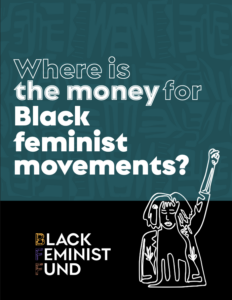
The very first global study on funding flows to Black feminist movements was published in 2023.
@blackfeministfund found that less than 1% of global philanthropy reaches women’s and girls’ causes—and a fraction of that supports Black feminist organising.
And yet: those movements have sustained themselves for decades.
So here’s what we keep asking ourselves: what could be possible if the resources finally matched the need?
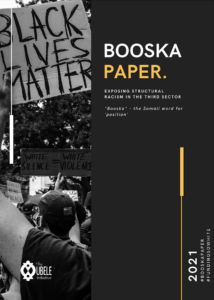
@ubeleinitiative’s Booska Paper (2021) documented how institutional racism shows up in UK funding: 9 out of 10 Black and minoritised organisations faced closure during COVID. Funding is overwhelmingly project-based, and decision-making boards often don’t reflect communities.
The paper produced nine calls to action in the form of a comprehensive roadmap: multi-year core funding, participatory decision-making, transparent data on who gets funded and rejected, among others.
What would it take for funders to adopt these calls into standard practice?
Want to learn more about radical funding practices and politics?
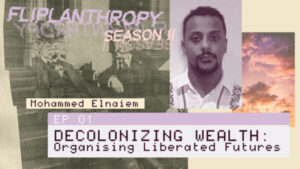
@guerrillafoundation’s Fliplanthropy series, which explores questions around radical redistribution, is back for Season 2!
First up: a conversation with Ismatu Gwendolyn on “Class Traitorship and the Merits of Collective Risk.” The question they’re asking: how do we embrace risk-taking as a necessary means to unleash collective power? What does class deconditioning offer us?
It’s turning philanthropy all the way out—instead of focusing on “safer” resourcing, the focus shifts toward revolutionary imaginations of collective empowerment.

Mama Cash’s Resilience Grants
Ten to twelve years of funding, plus non-financial support: collective care strategies, help with administrative burdens, grant-writing assistance, and connections to other donors.
That’s what Mama Cash offer through their Resilience Grants. They build relationships, trusting the people they fund to know what their communities actually need. The grants are designed for self-led feminist movements to grow on their own terms—with resources that match their timelines, not the other way around.
It’s not complicated, but it is rare: long-term resourcing that treats grantees as partners, not applicants. An innovative model for what could happen if more funders followed suit.
Learn more about how it all works here.

A fund that seeds, resources, and sustains feminist tech infrastructure—led by and for the Larger World (which is to say: not Europe or North America).
Numun Fund supports 43 “nodes” of organisers across the globe: from Confluencia de Mujeres in Colombia to Sursiendo in Mexico, Feminists in Kenya, SHOAW Gambia, Marigold Initiative in Sierra Leone, Ciberfem Lab in Guatemala, and many more.
Their five strategies include resourcing feminist tech networks, shifting philanthropic flows, and nurturing technologies that work for the majority. The Grantmaking Design Circle—made up of activists and practitioners—shapes how funding decisions get made.
This is what participatory, movement-led resourcing looks like across continents.
What happens when a fund puts decision-making power in the hands of the movements it serves?
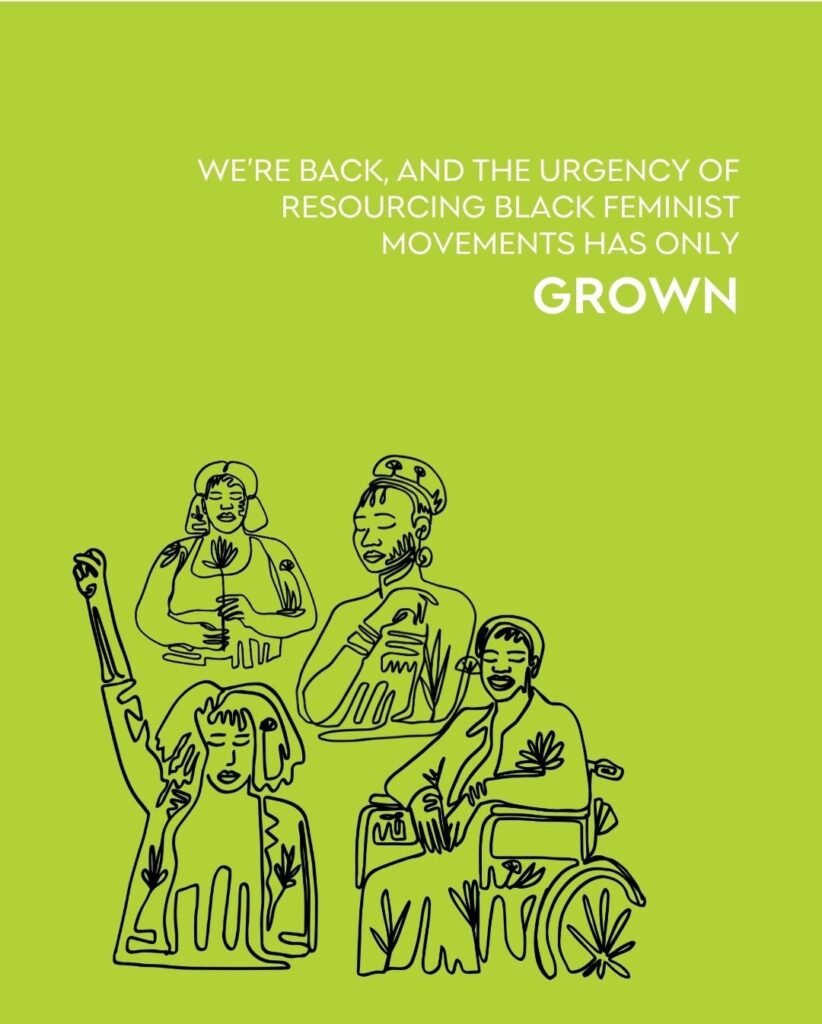
Black Feminist Fund
@blackfeministfund doesn’t just talk about trust-based philanthropy—they practice it, resourcing Black feminist organising on its own terms, without hoops, gatekeeping, or top-down dictates. Their participatory model means grantees lead, and the work they support spans everything from grassroots care networks to cross-border solidarity infrastructure.
Recently, they awarded $13 million in multi-year grants of up to eight years to Black LBTI+ groups—surpassing their original pledge and making LBTI+ funding 35% of their total grantmaking in 2025.
It’s a quiet but powerful shift: funding that follows trust instead of control. This is what liberation can look like when resources are part of the equation.
Collective Abundance
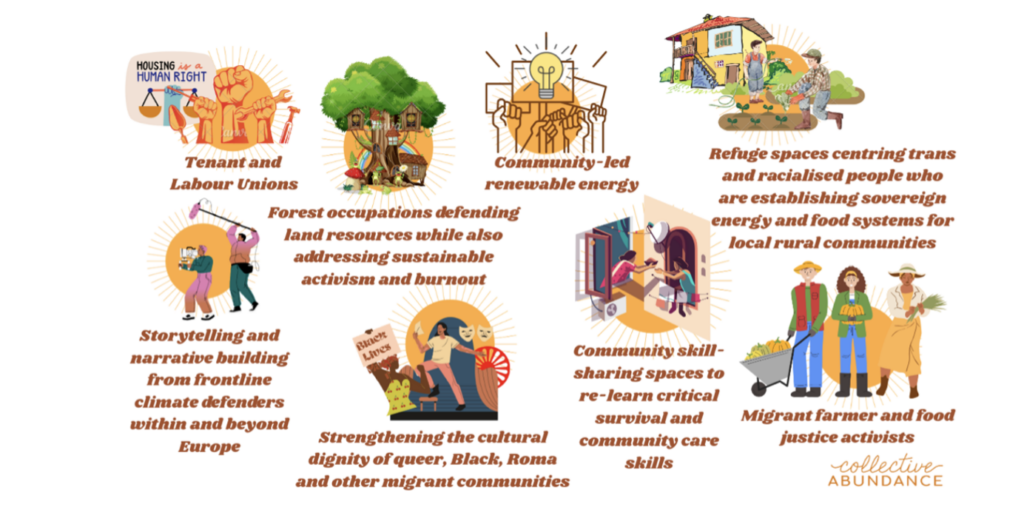
Deep relationships and cross-movement work are the essential foundation for any real environmental justice effort.
@collectiveabundance has been putting that into practice since 2023 with a flow funding model designed for ecosystemic, movement‑led regranting.
How it works: social justice organisers map and invite 10 groups per country to join a 4‑year journey. Each group receives individual funding, plus access to collective pots that strengthen connections across movements.
So far, they’ve supported active coalitions in Spain, Poland, and Greece — partnering with 30 grassroots groups across those regions and redistributing €1.5 million over the four‑year cycle.

What if we had a shared language for the world we’re trying to build — and some practical tools to get there?
@futuresindraft is a quietly brilliant little corner of the internet: part library, part toolkit. They collect stories, personal essays, how‑to guides, plus they host a podcast — all designed to support work that’s already happening and amplify the voices building a more just future.
One guide we’ve been digging into lately: How To Bank Ethically. It walks through credit unions, divesting from fossil fuels, participatory investment models — small choices that add up. Aligning our finances with our values is one way we start shifting the ground beneath our feet.
If you’ve ever wondered where to begin, this is a gentle, useful place to start.
“Six years ago, a consortium of began seeding a bold idea: what if queer movements owned the ground beneath their feet?”

The Home Fund has shifted that question into bricks and mortar — helping LGBTQIA+ organisations in East Africa buy land and buildings. Grants, low-interest loans, lease-to-own options. All designed to keep assets in collective hands for generations. That frees up space to heal, organise, and thrive.
When movements hold the deed, they grow roots. They build community memory, creative autonomy, and long-term sustainability.
Before Catalyst CIC closed in March 2026, they lit one last fire.

The Kindling Programme offered ten small grants of £4,000 each, plus an in‑person retreat, to help tech justice work take root across the UK. Grantees included a trans‑led investigation into LLM harms, a community‑trained AI filter for journalists, and a project exploring decolonial AI futures with diaspora communities.
Small pots of money, carefully placed, can nourish ideas that grow, connect, and spark new work long after a programme ends.
Music is a siren, and history is a shipwreck. But from the wreckage we uncover stories of pain, love, rebellion, freedom…

@wakinglife.pt is a midsummer festival, a landcare project, and a year‑round dojo for experimentation and play. Their recent essay, “Why Your Eardrums Have Always Been a Battleground: The Sonic Insurrection, Pt. 1” makes a clear case that music’s history is a history of political force – and that the future of gathering is where the battle for that force’s meaning is waged. A weeklong party as pedagogy. A temporary autonomous zone that fuels an evolving rural ecosystem.
What if recharging our energies together is just as critical as any grant?
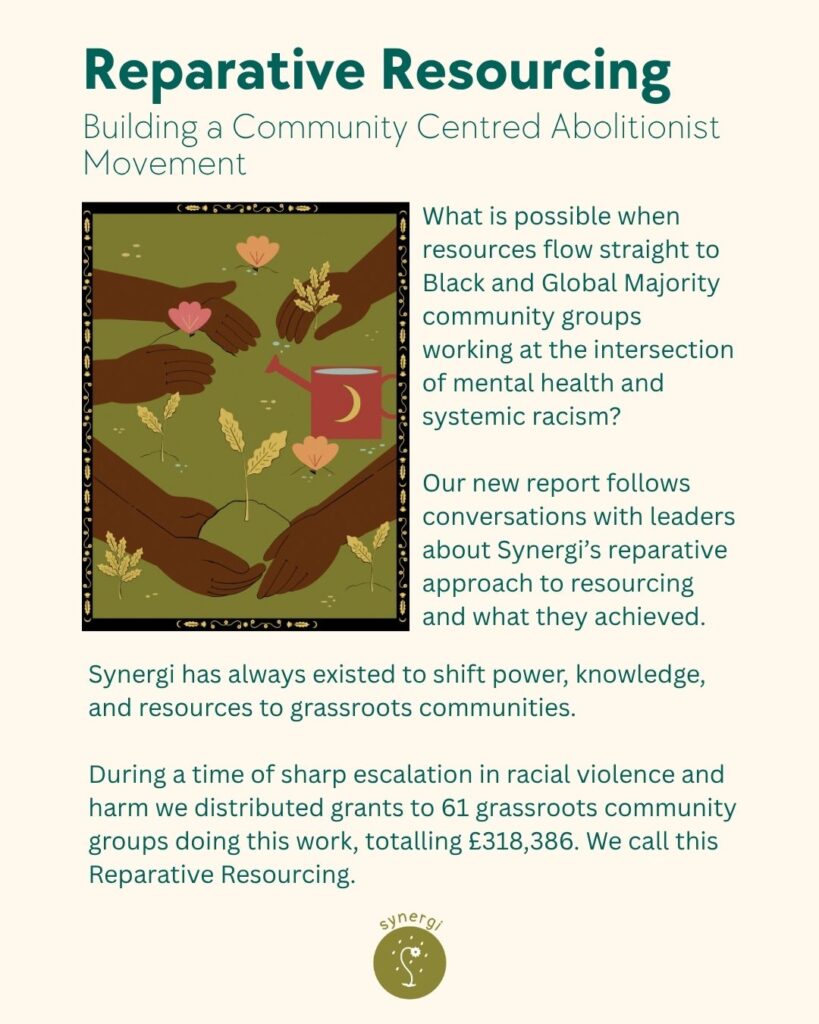
As we resurface from our April Deep Dive into Resourcing Movements, we leave you with a final offering: @synergiproject’s newly released report ‘Reparative Resourcing‘ chronicles a series of conversations around how Black and Global majority grassroots groups built community-led alternatives to the systemic racism of the mainstream mental health system.
The report explores what is possible when resources flow directly to Black and Global Majority community groups.
And now….. over to you, Dear Reader!